Fiber Architecture: Monofilament vs Fibrillated
The mechanical difference between modern texturized fibers and legacy slit-film systems.
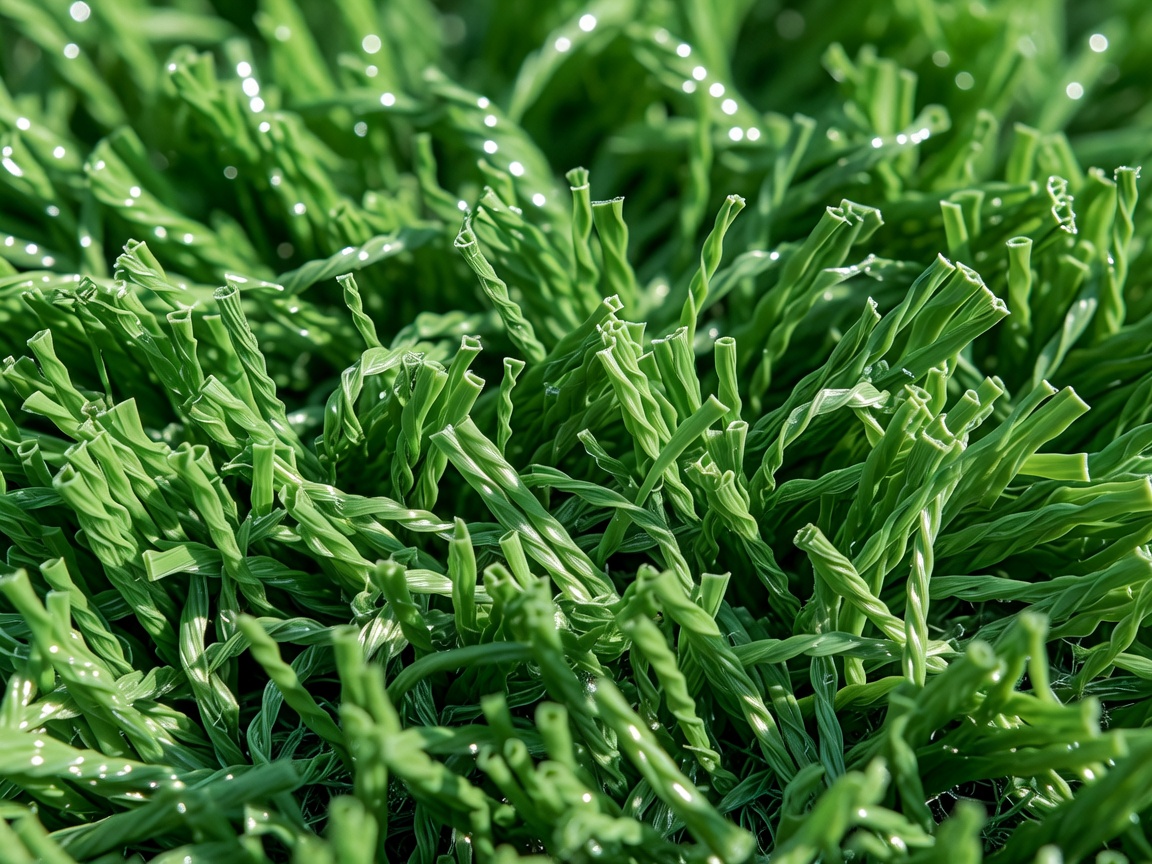
Early padel surfaces used traditional fibrillated polypropylene fibers requiring heavy sand loading (20–25 kg/m²). While economical, the sand accumulated unevenly in corners, creating erratic ball bounces and significant joint stress for athletes due to sudden directional locks.
Modern tournament infrastructure is dominated by texturized polyethylene monofilament (often crimped or curled). These fibers interlock to trap silica particles within their lower matrix, leaving the upper 2mm of fiber clean and uniform for consistent foot traction.
Technical Comparison
| Characteristic | Texturized Monofilament | Fibrillated Polypropylene |
|---|---|---|
| Fiber Height | 10 – 12 mm | 12 – 15 mm |
| Dtex (Density) | 8,000 – 10,000 Dtex | 6,600 – 8,800 Dtex |
| Stitches / m² | 42,000 – 58,000 | 38,000 – 44,000 |
| Sand Infill Req. | 6 – 10 kg / m² | 18 – 25 kg / m² |
| Ball Pace Rating | Medium-Fast (CPR 3) | Variable / Fast |
| UV Degradation | > 6,000 hours QUV | 3,000 – 4,000 hours |
Silica Sand Geometry & Infill Specifications
Why rounded grains prevent fiber fibrillation and rapid backing degradation.
Grain Geometry
Only washed, round-grained silica sand with SiO2 purity above 96% should be deployed. Angular crushed quarry sands act like miniature razor blades, shearing turf fibers at base level within 18 months of installation.
Granulometry Grading
Grain sizing must fall strictly between 0.2mm and 0.6mm. Sub-0.2mm particles create cementitious dust clouds under dry play, while particles above 0.8mm fail to penetrate dense texturized tufts.
Moisture Threshold
Installation requires silica sand with under 0.2% kiln-dried moisture content. Spreading damp sand guarantees clumping, incomplete root penetration, and uneven pile support.
Calculated Infill Formula for 200 m² Court
A standard 20m x 10m padel floor with 12mm texturized monofilament requires precisely 1,600 to 2,000 kg of kiln-dried silica sand (8 to 10 kg/m²). This distributes as roughly 64 to 80 bags of 25kg standard packaging, brushed in with motorized rotary equipment in four cross-pattern passes.
Primary and Secondary Backing Systems
Polyurethane (PU) versus Carboxylated Styrene-Butadiene Rubber (SBR) latex coatings.
The tuft-lock strength (retention capacity preventing yarn pullout) is directly controlled by the secondary chemical backing applied during factory tufting. While standard latex SBR coatings are adequate for indoor controlled environments, outdoor applications exposed to ground dampness require thermoset polyurethane (PU). Polyurethane coatings resist moisture hydrolysis and retain high flexibility through extreme winter freeze-thaw cycles.